Why Do Humpback Whales Change Their Breathing Rhythm Before a Long Dive?
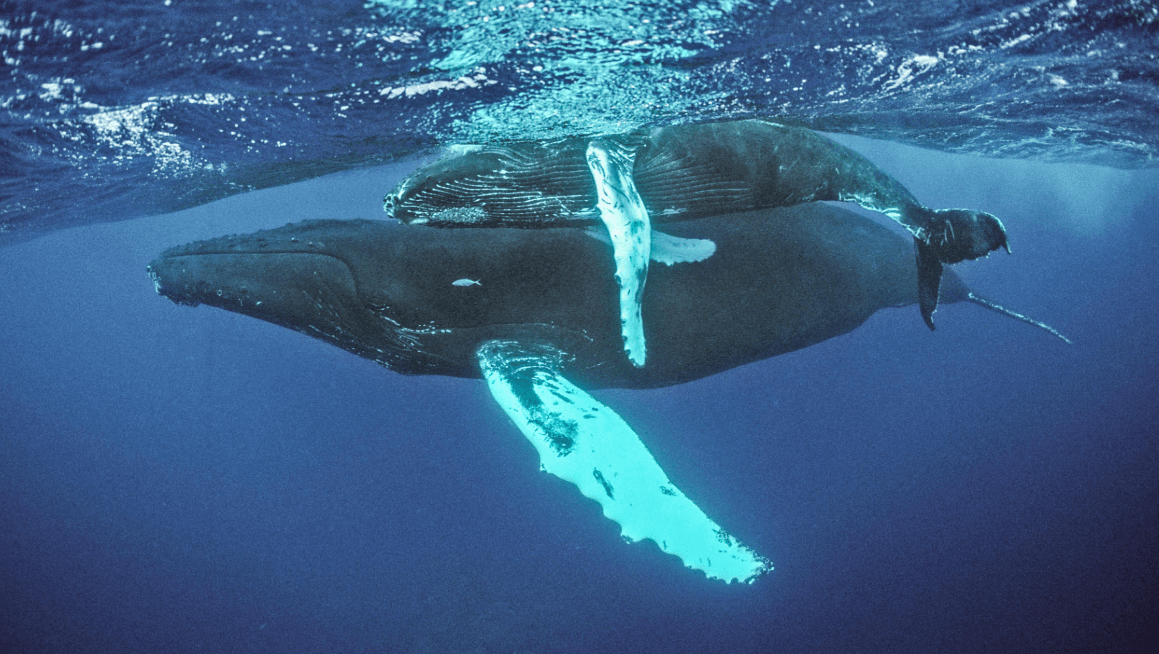
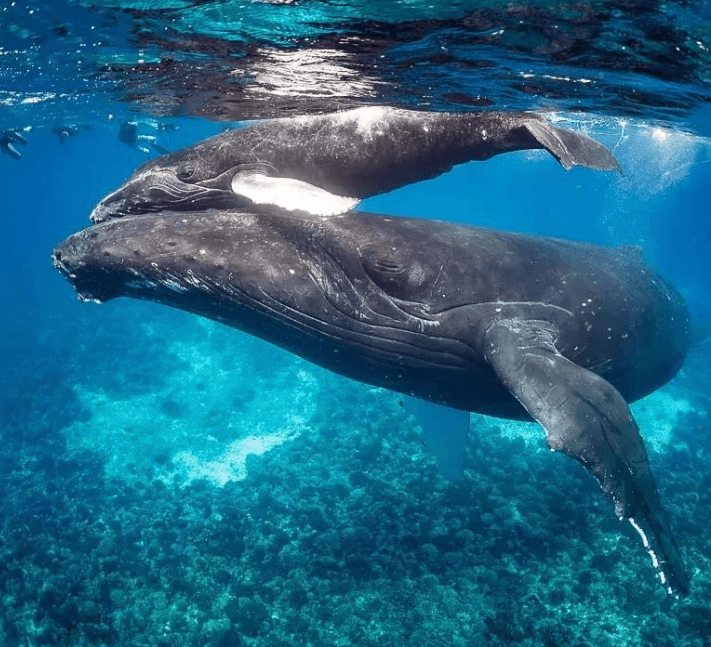
Watching a humpback whale surface in Samaná Bay, Dominican Republic, can reveal more than its enormous size and graceful movements. Sometimes, a whale appears at the surface several times before disappearing underwater for a longer period. This behavior raises an interesting question: why might a humpback whale change its breathing rhythm before a long dive?
Humpback whales are mammals that depend on atmospheric oxygen. They must surface to breathe, and the timing of their breaths can vary with their activity and diving behavior. However, not every sequence of breaths means a whale is preparing for a deep dive.
Understanding this relationship helps whale watchers recognize natural behavior without assuming that every surfacing pattern has the same explanation.
How Humpback Whales Breathe Before Diving
Humpback whales breathe through blowholes located on top of their heads. When they surface, they exhale and inhale through these openings before returning underwater.
Unlike humans, whales can exchange a substantial proportion of the air in their lungs during a breath. Their respiratory systems are adapted to diving, although they still need to return to the surface regularly.
Before some dives, a whale may surface several times in a relatively short period. These breaths help it exchange gases before spending additional time underwater.
The exact number of breaths varies. Some dives follow only a brief surface visit, while others may be preceded by several visible exhalations and inhalations.
Why Might a Whale Take Several Breaths Before a Long Dive?
Several physiological and behavioral factors can influence the relationship between breathing and diving.
1. Replenishing oxygen
Breathing allows a whale to replenish its oxygen supply before submerging. Oxygen is then used by the body while the animal remains underwater.
Whales also possess physiological adaptations that support diving, including substantial oxygen stores in their blood and muscles. These adaptations help them remain submerged longer than many land mammals could.
2. Adjusting to activity
A whale's breathing pattern may change depending on what it has been doing. Sustained swimming and other energetic activities can affect its oxygen requirements.
After periods of increased activity, a whale may show a different surfacing and breathing pattern from one swimming slowly. Researchers consider activity and dive history when interpreting these observations.
3. Preparing for a different dive
Not all dives are alike. A whale may make a relatively shallow dive, travel underwater, or remain submerged for a longer period.
Breathing behavior before a dive can vary with these circumstances. However, observers cannot reliably determine the intended depth or duration of a dive simply by counting breaths at the surface.
4. Individual variation
Humpback whales do not follow one universal breathing schedule. Their behavior varies with individual circumstances, age, activity, and environmental conditions.
This variation is one reason scientists collect repeated observations rather than drawing conclusions from a single surfacing event.
Does Every Long Dive Begin With More Breaths?
No. It would be misleading to assume that every long dive is preceded by a fixed number of breaths.
A whale may take several breaths before submerging, but another may dive after a shorter surface interval. The pattern can depend on what the animal was doing before the dive and other physiological or environmental factors.
Researchers distinguish between what they observe and what they can conclude from it. A series of breaths followed by a long dive establishes a sequence of events, but it does not automatically reveal the whale's precise physiological state or intention.
For whale watchers in Samaná Bay, this means breathing patterns are useful observations, not a dependable countdown to the next dive.
What Happens Inside a Humpback Whale During a Dive?
When a humpback whale submerges, it relies on oxygen already stored in its body. The respiratory system, circulatory system, and muscles all contribute to its ability to remain underwater.
Several adaptations support diving:
- Oxygen storage: Hemoglobin in the blood and myoglobin in muscles help store and transport oxygen.
- Blood-flow regulation: Diving mammals can adjust circulation in ways that help prioritize oxygen delivery to essential tissues.
- Energy management: Swimming speed and activity influence how quickly stored oxygen is used.
- Dive duration: The time spent underwater varies with the animal's behavior and circumstances.
These adaptations allow humpback whales to undertake underwater activities without breathing continuously. Nevertheless, they must return to the surface to replenish their oxygen supply.
How Can Whale Watchers Recognize the Start of a Dive?
Visitors may notice several visual clues that a humpback whale is about to submerge. These clues are not always present, and none guarantees that a long dive will follow.
A change in body position
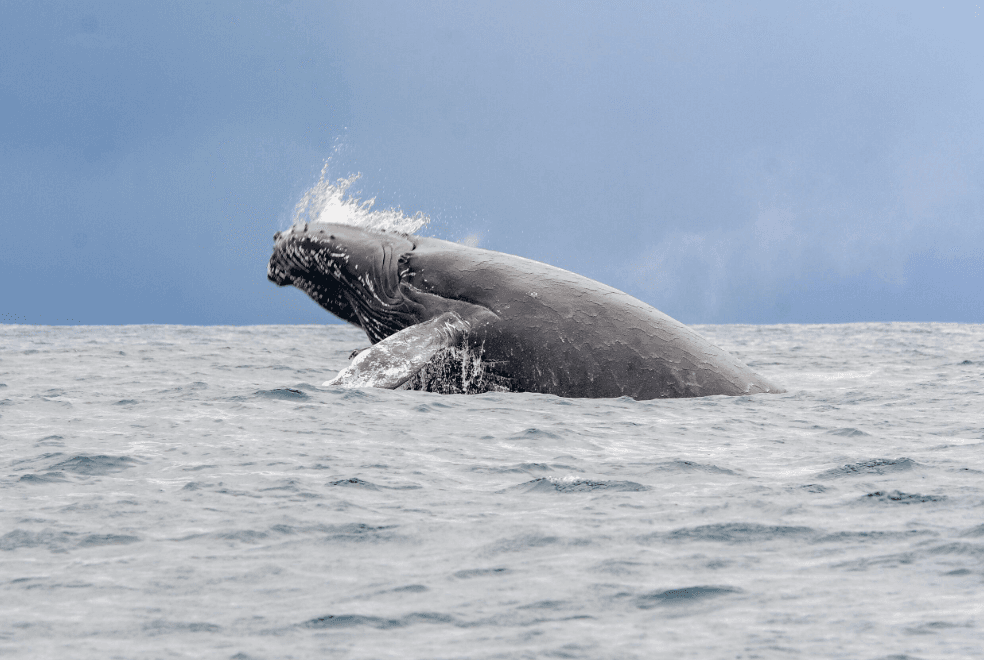
The whale may alter the angle of its body as it begins to descend. Its back can become more prominent above the water.
A final surface movement
Some whales make a noticeable movement before disappearing underwater. The exact movement depends on the type of dive.
Tail flukes appearing above the surface
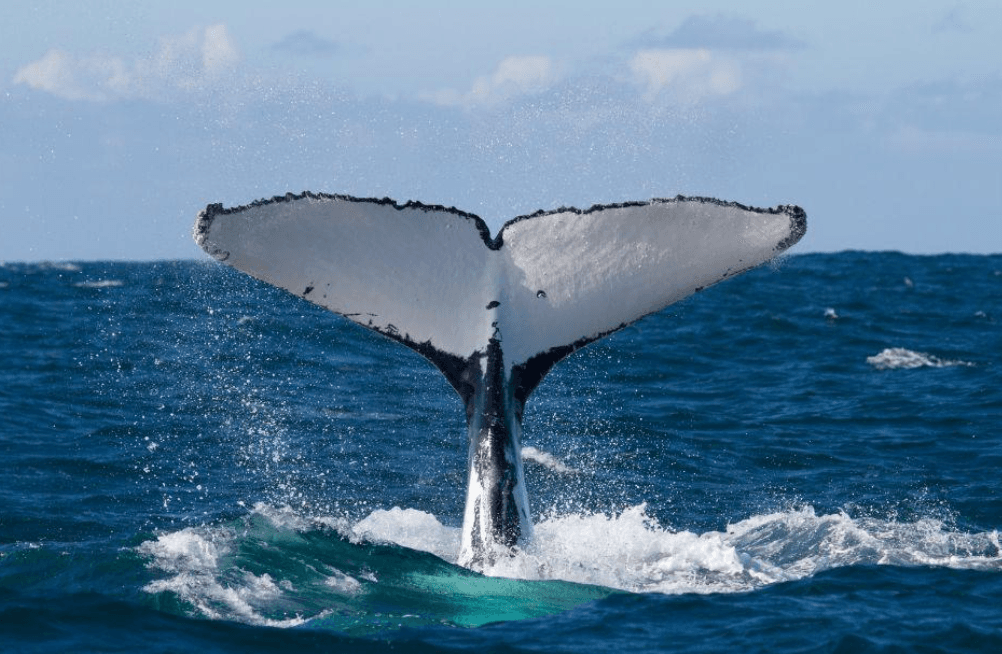
During some deeper dives, a humpback whale raises its tail flukes above the water. This behavior is commonly called a fluke-up dive. Whales do not always display their flukes when diving.
A period of underwater disappearance
After submerging, the whale may remain out of sight for a variable amount of time. Its next surfacing cannot be predicted precisely from the previous breathing sequence alone.
Observing these clues together can make a whale-watching experience more informative, especially when a knowledgeable guide explains what is visible and what remains uncertain.
Why This Behavior Matters in Samaná Bay
Samaná Bay is an important seasonal destination for North Atlantic humpback whales, particularly during the winter breeding season. Visitors commonly watch whales surface, breathe, dive, and reappear in different parts of the bay.
Understanding breathing and diving patterns can make the quieter moments of a trip more interesting. Even when a whale is not breaching or slapping its tail, its movements provide opportunities to learn about marine mammal physiology.
Because individual whales behave differently, responsible guides avoid promising that a particular sequence of breaths will lead to a specific display. Wildlife encounters are unpredictable, and observing animals in their natural environment requires patience.
Visitors should also respect local whale-watching regulations, maintain appropriate distances, and avoid encouraging boat operators to pursue whales that are moving away.
How Scientists Study Whale Breathing and Diving
Researchers use a range of techniques to investigate how whales breathe and spend time underwater.
Surface observations: Researchers record the timing of surfacings, visible blows, and dive events.
Photo-identification: Photographs of distinctive tail flukes can help researchers identify individual whales and compare observations across encounters.
Electronic tags: Where permitted and appropriate, specialized tags can collect information about movement, dive depth, and duration. Tagging requires trained researchers and suitable ethical and legal safeguards.
Repeated records: Comparing observations over time helps scientists distinguish individual variation from broader behavioral patterns.
Combining these methods can provide a more complete picture than observing a single dive from a boat.
Frequently Asked Questions
How many breaths does a humpback whale take before a long dive?
There is no fixed number. The number of breaths varies with activity, individual behavior, and other circumstances. A longer dive cannot be predicted reliably by counting breaths alone.
Why do humpback whales need to breathe before diving?
Whales need oxygen to support their bodies. Surfacing allows them to exchange air before using oxygen stored in their blood and muscles during a dive.
Can you tell how deep a whale will dive by watching it breathe?
No. Breathing patterns alone do not reveal the exact depth or duration of the next dive. Body movements and other observations may provide additional clues, but they are not guarantees.
Why does a whale sometimes disappear for a long time?
A humpback whale may remain underwater while traveling or carrying out other activities. The length of a dive varies, and a whale's absence from view does not necessarily indicate a problem.
Do humpback whales always lift their tails before diving?
No. Some dives involve raising the tail flukes above the water, while others do not. A fluke-up dive is one possible behavior rather than a feature of every dive.
Can visitors observe these behaviors in Samaná Bay?
Visitors may observe breathing sequences and dives during the whale-watching season. Sightings, surfacing intervals, and visible behaviors vary, so no specific pattern is guaranteed on a trip.
Conclusion
Humpback whales may change their breathing patterns around longer dives as part of the relationship between oxygen exchange, activity, and underwater behavior. Several breaths may occur before a dive, but there is no universal sequence that every whale follows.
In Samaná Bay, watching a whale surface and then submerge offers a glimpse into the adaptations that allow these marine mammals to live in the ocean. By observing carefully and avoiding assumptions about what each movement means, visitors can gain a deeper appreciation of humpback whale biology.
The next time a whale surfaces several times before disappearing, remember that its breathing pattern is one piece of a much larger picture of life beneath the sea.

Local explorer & expert guide in Tours Miches.