Why Does the Ocean Look Silver During Whale Watching in Samaná Bay?
During a whale-watching trip in Samaná Bay, Dominican Republic, the ocean can sometimes appear to shimmer with a bright silver glow. Sunlight catches the moving surface, creating sparkling highlights that stretch across the water and change as the boat moves.
For visitors hoping to see humpback whales, this effect can be beautiful but occasionally challenging. The bright reflections may make it harder to distinguish details on the water, particularly when looking toward the sun.
So why does the ocean sometimes look silver instead of blue The answer lies mainly in how sunlight reflects from the water's surface, combined with the observer's viewing angle and the movement of the sea.
Understanding this natural effect can help travelers appreciate the scenery, take better photographs, and observe marine wildlife more comfortably.
What Makes the Ocean Look Silver?
The ocean does not actually turn into silver. The appearance comes from sunlight reflecting off countless small sections of the water's surface.
Each small wave or ripple has a slightly different angle. Some of these surfaces reflect sunlight toward the observer, producing bright flashes that can blend into a shimmering patch.
When many reflections occur close together, the water may look silver, white, or metallic. The effect can be especially striking when the sun is bright and the observer is looking in a direction that catches the reflected light.
In Samaná Bay, this appearance may change as the boat moves, the waves shift, or clouds pass in front of the sun.
How Does Sunlight Create Sparkling Reflections?
Sunlight travels toward the ocean and interacts with the water's surface. Some light enters the water, while some reflects back into the surrounding environment.
The amount of light reflected toward a particular observer depends partly on the angle of the surface and the direction of the sunlight.
Because the ocean is constantly moving, its surface is made up of many small slopes rather than one perfectly flat plane. As waves rise and fall, different parts of the surface briefly reflect light toward the observer.
This produces the sparkling effect commonly called sun glitter.
From a whale-watching boat, sun glitter may appear as scattered points of light or as a broad, bright path extending across the water. Its shape and intensity change with the sun's position, wave conditions, and viewing angle.
Why Does the Silver Effect Change When the Boat Moves?
A boat's movement changes the observer's position relative to the sun and the water's surface.
When you look in one direction, the reflections may appear relatively faint. Turning toward another direction can bring a much brighter patch into view.
The same effect can occur when the boat changes heading or when passengers move to a different viewing position.
The reflections also change as the waves move. A patch that appears intensely silver for a few seconds may become less noticeable as the angles of the water surface change.
This is why the ocean can seem to shift between blue and silver during a single trip, even without a major change in weather.
Can Silver Reflections Make Humpback Whales Harder to See?
Yes. Bright reflections can reduce the visibility of details on the water, particularly when the sun is positioned behind or near the direction in which a passenger is looking.
Sun glitter may compete visually with a whale's blow, back, or dorsal fin. The glare can also make it more difficult to follow movement near the surface.
The effect depends on the brightness of the reflections, the distance to the animal, the whale's position, and the surrounding conditions.
When the surface is strongly illuminated, looking slightly away from the brightest reflection may make it easier to observe the wider area. Polarized sunglasses can also reduce some glare, although they cannot eliminate every reflection.
Always follow your guide's directions about where to look. A guide may be able to identify a whale in an area that initially appears difficult for passengers to observe.
Does Silver Water Mean a Whale Is Nearby?
No. A silver-looking ocean is not a reliable indicator of humpback whale activity.
The shimmering appearance is primarily a lighting and surface-reflection effect. It can occur whether or not whales are in the immediate area.
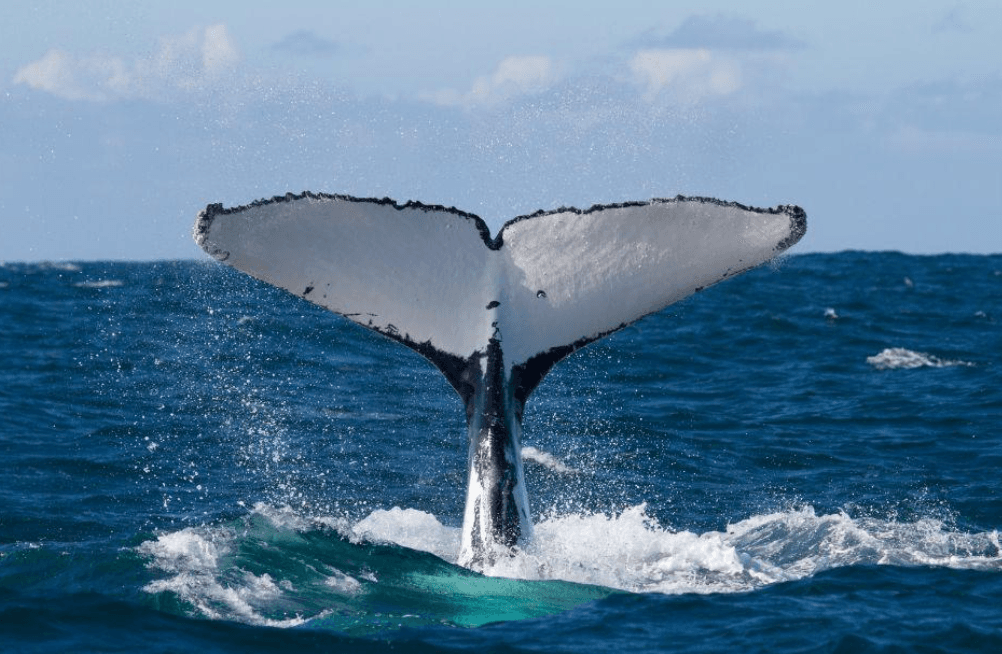
During a whale-watching trip, visitors should look for direct signs of wildlife, such as a visible blow, the whale's back, a dorsal fin, or a tail fluke. These observations provide stronger evidence of a sighting than the color or brightness of the water.
Even when the ocean appears bright and reflective, a whale may surface nearby. Equally, the sea may shimmer for a long time without a whale appearing.
The best approach is to enjoy the changing light while remaining attentive to the guide and the surrounding water.
Why Does the Ocean Look Silver at Certain Times of Day?
The sun's position changes the angle at which its light reaches the water and reflects toward an observer.
When the viewing direction aligns with the reflected sunlight, the sea can appear especially bright and metallic. At other angles, the same water may look deep blue or relatively subdued.
The effect is not limited to one particular hour. Its intensity depends on the relationship between the sun, the water's surface, and the observer's position.
Clouds can soften or interrupt the reflections. As the sun moves behind a cloud, a bright silver patch may become less intense and then return when direct sunlight reappears.
For travelers, this changing appearance is part of the natural scenery of Samaná Bay rather than a sign that the ocean itself has suddenly changed composition.
How Can You Photograph a Silver Ocean?
The silver shimmer can create attractive photographs, especially when the reflections form a bright path across the water.
However, strong highlights can make it difficult to capture both the reflections and the surrounding scenery with balanced detail.
Try these photography tips during your excursion:
- Change your angle: A small change in viewing direction can alter the brightness of the reflections.
- Avoid staring directly into intense glare: Choose a comfortable angle that still allows you to observe the scene.
- Keep the exposure in mind: Bright reflections may cause the camera to render other parts of the image darker.
- Include context: A horizon, distant coastline, or boat can help show the scale of the scene.
- Prioritize wildlife: If a whale appears, focus on observing it safely rather than spending too long adjusting camera settings.
- Follow the guide's instructions: Keep your equipment secure and avoid moving into unsafe positions for a photograph.
A silver ocean can be a worthwhile subject on its own, even when no whale is visible in the frame.
What Can Visitors Learn From This Natural Effect?
The silver appearance of the ocean demonstrates how strongly light influences our perception of the marine environment.
Water that looks dark blue from one position may appear bright and reflective from another. These differences do not necessarily indicate a change in depth, water quality, or wildlife activity.
Paying attention to sunlight and reflections can help visitors become more observant during their trip. It can also explain why a whale is sometimes easier for one passenger to see than another, even when both are watching the same general area.
Samaná Bay offers more than a chance to see humpback whales. Its changing seascape provides an opportunity to appreciate the relationship between light, moving water, and the surrounding environment.
Frequently Asked Questions
Why does the sea look silver instead of blue?
Sunlight reflected from many small sections of the moving water's surface can create bright silver or white highlights. The effect depends on the light, waves, and viewing angle.
What is sun glitter?
Sun glitter is the pattern of sparkling sunlight reflected from a moving water surface. It can appear as scattered flashes or a bright path across the sea.
Can silver reflections hide a humpback whale?
Bright reflections can make it harder to see details near the surface. Visibility depends on the intensity of the glare, the whale's position, and other viewing conditions.
Does silver water mean the sea is calm?
No. Silver reflections can occur on water with small waves because the moving surface creates many different reflection angles.
What can I do if sunlight makes whale watching difficult?
Try observing from a different safe angle, use suitable sunglasses, and follow your guide's directions. Do not move to an unsafe position to avoid glare.
Conclusion
The ocean sometimes looks silver during whale watching in Samaná Bay because sunlight reflects from the constantly changing surface of the water. The effect can shift as the boat moves, waves change shape, and clouds pass across the sun.
Although these reflections can create beautiful scenery, they may also make humpback whales harder to see under certain conditions. A silver ocean does not indicate that a whale is nearby, so visitors should continue watching for direct signs of wildlife.
By understanding sun glitter and adjusting your viewing angle when appropriate, you can enjoy the scenery while remaining ready for a memorable humpback whale encounter.

Local explorer & expert guide in Tours Miches.