Why Does the Ocean Look Darker Near Whale-Watching Boats in Samaná Bay?
During a whale-watching trip in Samaná Bay, Dominican Republic, visitors may notice that the water beside their boat looks darker than the surrounding sea. One patch might appear deep navy blue, while nearby water looks bright blue or turquoise.
This contrast can be especially noticeable when sunlight reflects off the ocean or clouds move across the sky. Travelers may wonder whether the darker water indicates greater depth, an underwater feature, or even a humpback whale swimming below the surface.
The appearance of dark water can have several explanations. Shadows, reflections, viewing angles, water depth, and the properties of the water itself can all influence what an observer sees. Understanding these factors helps whale watchers interpret the scenery without assuming that a dark patch reveals something specific beneath the surface.
How Can a Boat Cast a Shadow on the Water?
A whale-watching boat can block some of the sunlight reaching the water immediately beside it. Depending on the sun's position, this shadow may create a darker patch near the hull.
The effect is often easier to notice when the surrounding water is brightly illuminated. The contrast between the shaded area and the sunlit sea can make the water seem to change color abruptly.
The shape and position of a shadow depend on the boat's size, the direction of the sunlight, and the height of the sun above the horizon. As the boat turns or the light changes, the shadow may shift as well.
However, not every dark patch beside a boat is a shadow. Reflections and natural differences in the water's appearance can produce similar contrasts.
Why Does the Viewing Angle Matter?
The ocean's appearance depends partly on where you are looking from.
A passenger looking straight down at the water may see a different shade from someone looking toward the horizon. The angle affects how sunlight reflects off the surface and how much light from beneath the surface reaches the observer.
When the boat moves, the viewing angle changes continuously. A patch of water that looks dark from one seat may appear lighter from another position.
This effect is particularly noticeable when sunlight creates bright reflections on the sea. The reflected light can make one part of the water appear almost silver while a nearby area looks much darker.
For visitors in Samaná Bay, changing viewpoints are a natural part of observing the ocean from a moving boat.
Can Reflections Make Water Look Darker?
Yes. Reflections can either brighten or darken the apparent appearance of the sea, depending on what is reflected and where the observer is positioned.
At certain angles, the surface reflects a bright sky or direct sunlight. At other angles, it may reflect darker parts of the sky or surrounding landscape.
This can create strong visual contrasts without any major change in the water itself.
Reflections also affect how easily passengers can see beneath the surface. A dark-looking patch may be difficult to interpret because the reflected image of the sky can obscure details below the waterline.
Polarized sunglasses may reduce some glare, depending on the viewing angle and lighting conditions. Even with sunglasses, however, surface reflections can make underwater observations uncertain.
Does Dark Water Always Mean Greater Depth?
No. Although deeper water may appear darker under some conditions, color alone cannot reliably establish depth.
Shallow water may look dark when it is shaded or when the surface reflects a darker part of the sky. Meanwhile, deeper water can appear bright blue under strong sunlight and favorable viewing conditions.
The color of the seabed, the clarity of the water, and suspended particles also influence the appearance of the sea.
If you notice a dark patch beside a whale-watching boat, it is better to treat it as a visual observation rather than a depth measurement. Reliable depth information requires appropriate equipment or trusted nautical data.
Can a Humpback Whale Make the Water Look Darker?
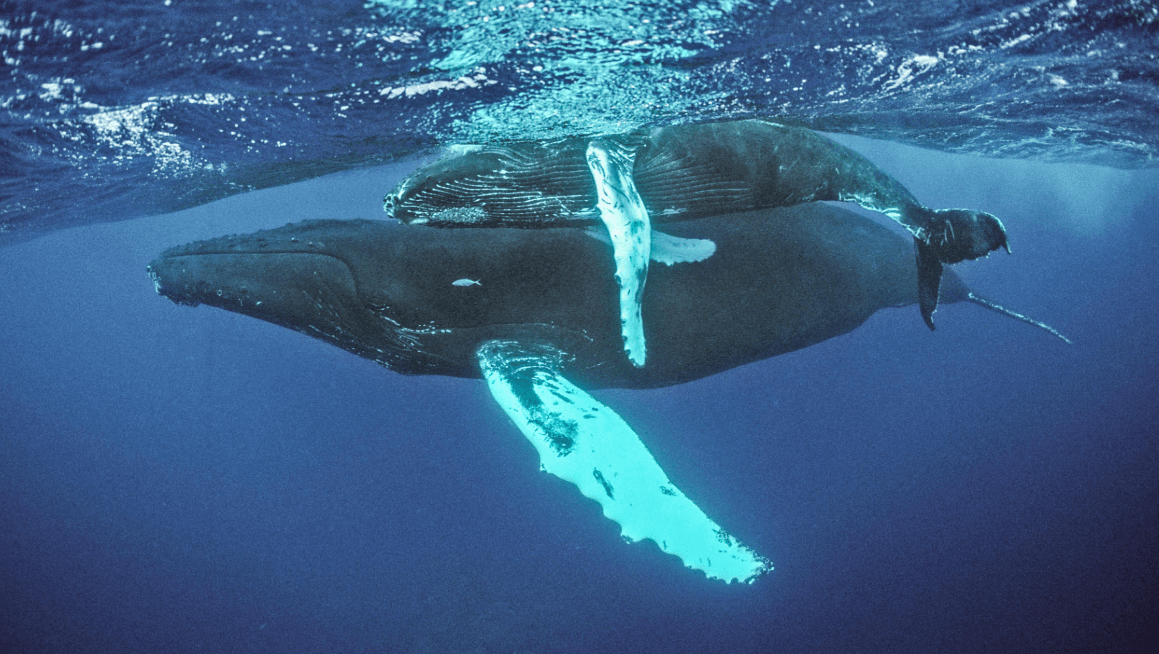
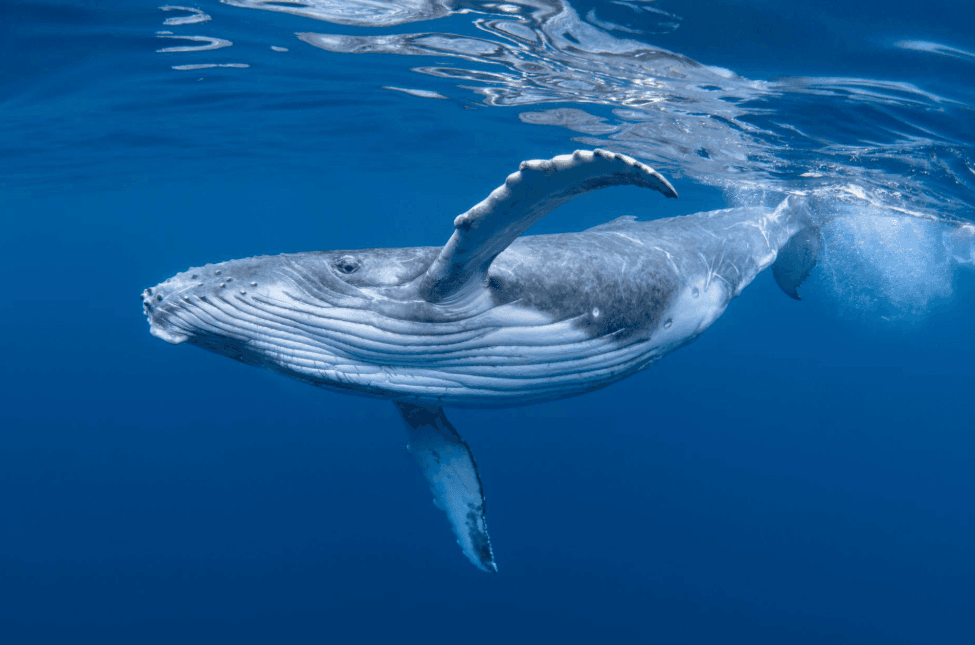
A humpback whale swimming near the surface may sometimes be associated with a visible change in the water's appearance. For example, the whale's body may become visible beneath clear water, or its emergence may disturb the surrounding surface.
However, a dark patch alone does not confirm that a whale is present. The same appearance can result from shadows, reflections, and ordinary changes in lighting.
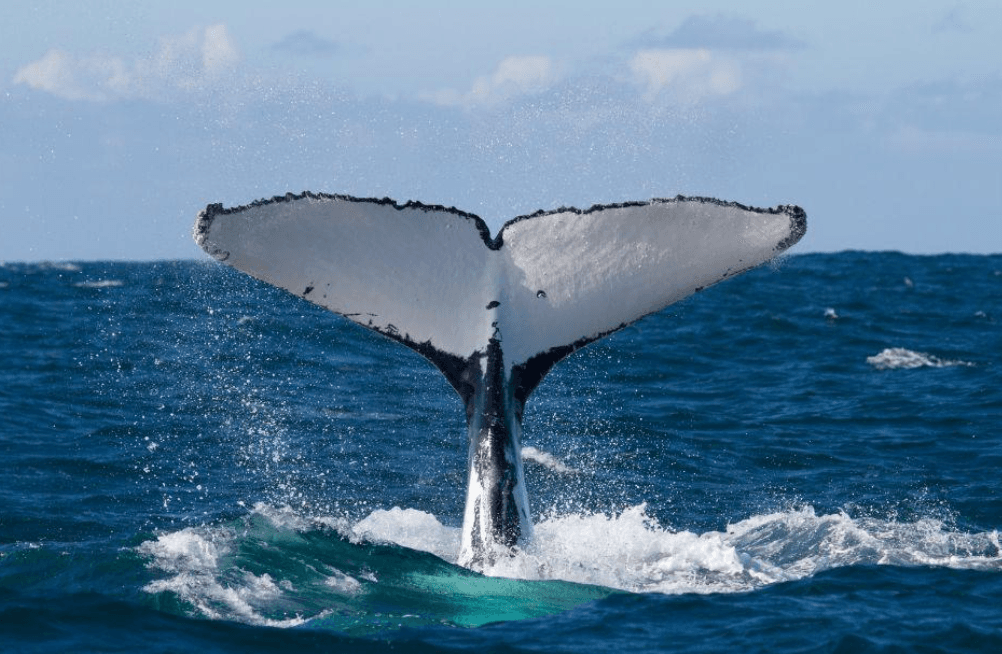
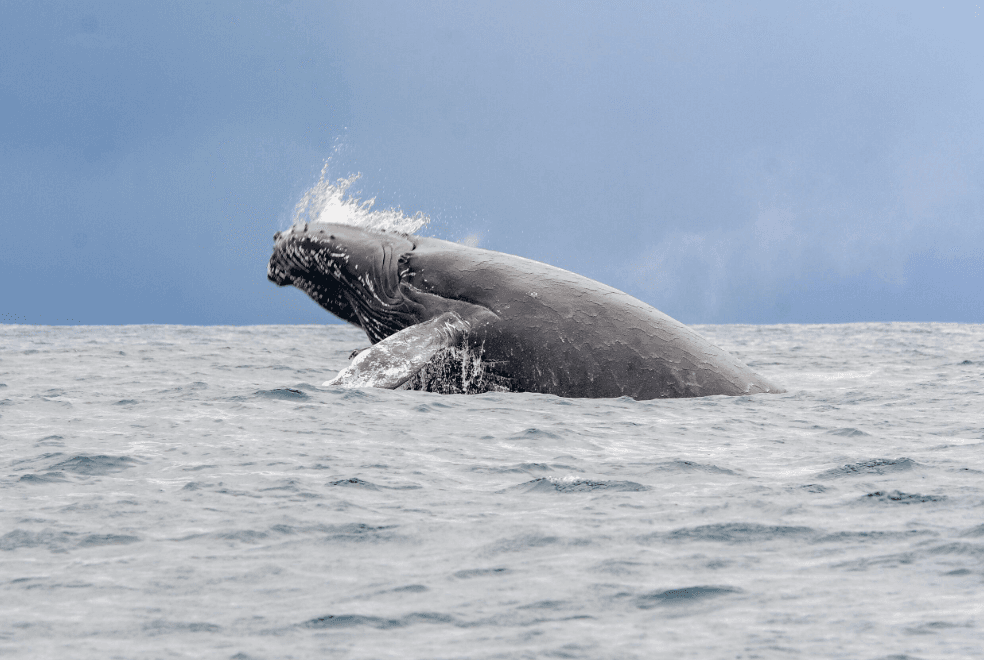
If a whale surfaces nearby, visitors may be able to observe more direct signs, such as its blow, back, dorsal fin, or tail fluke.
Even when the animal remains underwater, it is not possible to identify its location reliably from water color alone. Whale watchers should look for multiple observations and listen to their guide's interpretation rather than treating every dark patch as a potential sighting.
How Do Clouds Change the Appearance of Water Near a Boat?
Clouds influence the amount and distribution of sunlight reaching the ocean.
When a cloud blocks the sun, a section of water may appear darker than the surrounding area that remains illuminated. If the cloud moves, the contrast may gradually disappear or shift to another part of the sea.
Cloud shadows can extend across a wide area, so a dark patch is not necessarily related to the boat itself.
Changing cloud cover may also alter the overall brightness of the ocean throughout a trip. Water that looked vivid blue in direct sunlight may appear muted under an overcast sky.
These changes are normal and can happen quickly in coastal environments.
How Can Visitors Observe These Changes During Whale Watching?
You do not need special equipment to notice differences in the appearance of water around a boat. A little attention to lighting and viewpoint can reveal useful details.
Try these simple observation techniques:
- Compare nearby areas: Notice whether dark water occurs only beside the boat or extends across a larger section of the sea.
- Watch the sunlight: Observe how the appearance changes as clouds pass or the boat changes direction.
- Look from another safe viewing position: The color may appear different from another angle.
- Distinguish shadows from wildlife: Look for recognizable whale features before concluding that an animal is present.
- Avoid judging depth by color: Darker water does not necessarily mean deeper water.
- Follow the guide's instructions: Let the crew manage boat positioning and maintain a respectful distance from wildlife.
These observations can make the journey more interesting even when no whale is visible at that moment.
Why Does This Matter for Whale-Watching Photography?
Dark patches of water can create contrast in photographs, particularly when the ocean has several shades of blue.
A shaded section beside a boat may make the surrounding sunlit water appear brighter. Reflections can add visual texture, while changing light can give the same location a different appearance within minutes.
For wildlife photography, it is important to distinguish a visual effect from an actual subject. A dark area of water may look dramatic in a photograph, but it does not necessarily reveal a whale beneath the surface.
To improve your photographs, pay attention to the direction of the sunlight, avoid excessive glare where possible, and keep your camera ready for genuine wildlife activity. Do not let photographing the water distract you from observing the ocean and following your guide's safety instructions.
Frequently Asked Questions
Why is the water beside my whale-watching boat darker?
The boat's shadow, the angle of reflected light, clouds, and natural differences in water appearance may all contribute. The cause cannot always be determined from color alone.
Does dark water mean the ocean is deeper there?
Not necessarily. Water depth is only one of several factors that influence ocean color. Shadows and reflections can make shallow water appear dark.
Can I see a whale through a dark patch of water?
Sometimes a whale may be visible beneath the surface in suitable conditions, but a dark patch itself does not establish that a whale is there. Visibility depends on water clarity, light, depth, and the animal's position.
Why does the water change color when the boat turns?
Turning changes your viewing angle relative to the sun and the water surface. This can alter reflections and the apparent brightness of different areas.
Are dark patches common during whale watching in Samaná Bay?
Contrasts in ocean color are a normal feature of viewing the sea. Their appearance varies with sunlight, clouds, water conditions, and the position of the boat.
Conclusion
Dark-looking water near a whale-watching boat can result from shadows, reflections, changing sunlight, viewing angles, and natural differences in the water's appearance. Although depth and underwater features may also influence ocean color, a dark patch alone cannot reveal what lies beneath the surface.
During a whale-watching excursion in Samaná Bay, paying attention to these visual details can help you better appreciate the surrounding marine environment. Just remember that an unusual shade of water is not proof of a whale sighting.
Observe patiently, follow your guide's instructions, and enjoy the changing colors of the ocean as part of the wider experience of exploring Samaná Bay.

Local explorer & expert guide in Tours Miches.