Why Do Humpback Whales Sometimes Swim in Circles in Samaná Bay?
During a whale-watching trip in Samaná Bay, Dominican Republic, you might notice a humpback whale changing direction repeatedly instead of swimming along a straight path. Sometimes, its movements may look like a broad curve or a circular route through the water.
This can raise an interesting question: why would a whale swim in circles when it could continue moving forward?
Humpback whales maneuver for different reasons, and a curved swimming path does not have one universal explanation. A whale may be turning to approach another animal, adjusting its direction, changing its position within a group, or responding to its immediate surroundings. From a boat, however, it can be difficult to determine the precise reason for the movement.
Understanding what you see—and what you cannot confidently conclude—can make whale watching in Samaná Bay more informative and rewarding.
What Does Circular Swimming Look Like?
Circular swimming describes a movement in which a whale follows a curved path that may bring it around toward an earlier position. Depending on the size and shape of the turn, the movement may look like a complete circle, a broad loop, or several connected curves.
Not every change of direction is circular swimming. A whale might make one sharp turn, change its orientation briefly, or follow a winding route without completing a circle.
From a whale-watching boat, the distinction can be difficult to see because much of the animal's movement happens underwater. Passengers may observe only occasional appearances at the surface.
For this reason, it is useful to describe the visible pattern carefully rather than assuming that every curved movement represents a deliberate circular behavior.
1. A Whale May Be Changing Direction
One straightforward explanation for a curved path is that the whale is maneuvering.
Humpback whales can change direction as they travel through the ocean. Instead of maintaining a straight course, an animal may turn gradually or make several adjustments as it moves.
If these turns happen close together, the overall path may appear circular from the surface.
For example, a whale might swim across the viewing area, turn, and later surface at a position that seems close to where it appeared earlier. Without observing its complete underwater route, passengers may interpret this as swimming in a circle.
What to observe: Look for changes in the whale's position across several sightings. Notice whether it continues moving through the area or appears to follow a repeated curved route.
2. The Whale May Be Maneuvering Around Another Whale
Samaná Bay is a seasonal destination for North Atlantic humpback whales, including animals involved in breeding-season social interactions.
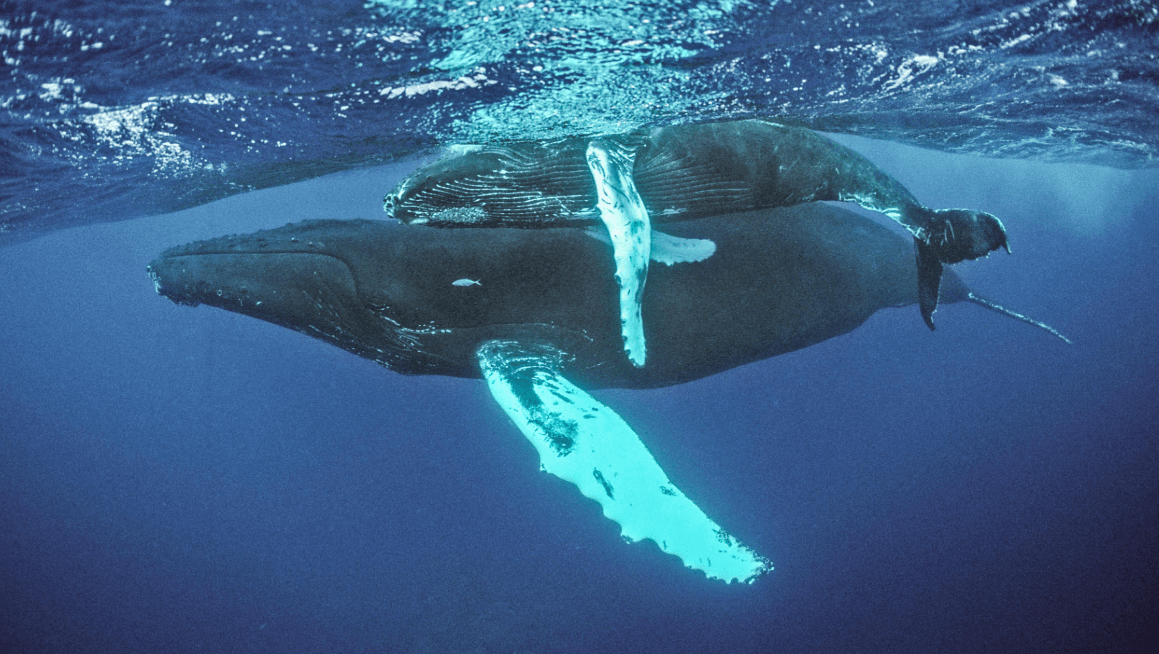
When whales are near one another, their movements may become more complex. An animal may turn toward another whale, change its position, move alongside it, or separate before approaching again.
From a boat, these movements can sometimes resemble circular swimming.
However, a curved path near another whale does not automatically indicate courtship, competition, or aggression. The animals' exact relationship and intentions cannot always be determined from their positions alone.
To understand the encounter better, observe the spacing between the whales, whether their directions change together, and whether they remain near one another over time.
3. A Whale May Be Adjusting Its Position Within a Group
Humpback whales may be observed alone or near other whales. When several animals occupy the same general area, their positions can change as they move.
One whale might pass another, turn away, or change direction as the group spreads out or comes closer together. These adjustments may produce curved paths that appear circular from certain viewing angles.
It is important not to assume that all whales in an area are following a coordinated plan. Their movements may be related, but each animal can change direction independently.
During a Samaná whale-watching excursion, a guide may help you track individual animals and explain the visible pattern without assigning an unsupported motive to every turn.
4. Could Underwater Conditions Influence a Whale's Route?
The marine environment can affect how whales move through an area. Water depth, currents, and the surrounding habitat may be relevant to an animal's movement.
Nevertheless, seeing a whale follow a curved path does not prove that it is responding to a particular current or underwater feature.
Establishing that explanation would require additional information about the environment and the whale's movements. A curved path alone is not sufficient evidence.
For visitors, the most reliable approach is to distinguish between the movement they directly observe and possible explanations that remain uncertain.
5. Why a Whale May Appear to Complete a Circle
The view from a boat is not the same as observing a whale's full path from above.
A whale may disappear underwater while turning and then reappear somewhere that seems close to its previous position. The boat may also drift or change direction during the interval.
These factors can make a series of turns look like a complete circle even when the whale has followed a more complicated route.
For this reason, a few surface sightings are not enough to establish the exact shape of an underwater path.
Guides and researchers may use repeated observations and additional tracking information to understand movement patterns more accurately.
6. Is Circular Swimming a Sign of Distress?
Not necessarily. A curved or circular-looking path by itself does not establish that a humpback whale is sick, injured, confused, or distressed.
Whales naturally maneuver through the water, and their movement patterns can vary with their activity and surroundings.
Assessing an animal's condition requires more context than a single observed route. If a whale appears to be in difficulty, visitors should notify the tour guide or crew rather than attempt to approach it.
Responsible whale watching means giving animals space and allowing trained personnel to respond appropriately when necessary.
How to Observe Circular Swimming During a Samaná Whale-Watching Trip
You do not need scientific equipment to become a more careful observer. A few simple practices can help you make better sense of a whale's movements.
Watch more than one surfacing
A single appearance may reveal only a small part of the whale's route. If the animal surfaces again, compare its position with the previous sighting.
Pay attention to nearby whales
Notice whether other animals are present and whether their movements appear connected. Remember that proximity alone does not prove a particular social relationship.
Observe the direction of movement
Look for changes in direction rather than relying only on where the whale surfaces. Repeated turns may provide more useful information than one isolated appearance.
Account for the boat's movement
The vessel may drift or turn while you are observing the whale. This can affect how the animal's position appears to change.
Listen to your guide
Experienced guides can help identify what is visible and explain the limits of interpreting behavior from a brief encounter.
Avoid assigning a definite motive
It is natural to wonder why a whale follows a particular path, but not every movement has an obvious explanation. Careful observation is more valuable than an unsupported conclusion.
Circular Swimming Compared With Other Whale Behaviors
Humpback whales perform a variety of movements that can look unusual from the surface. Understanding the differences helps visitors describe sightings more accurately.
- Circular swimming: The whale follows a curved path that may form a loop or circle.
- Sideways rolling: The whale rotates its body, exposing part of its side or underside.
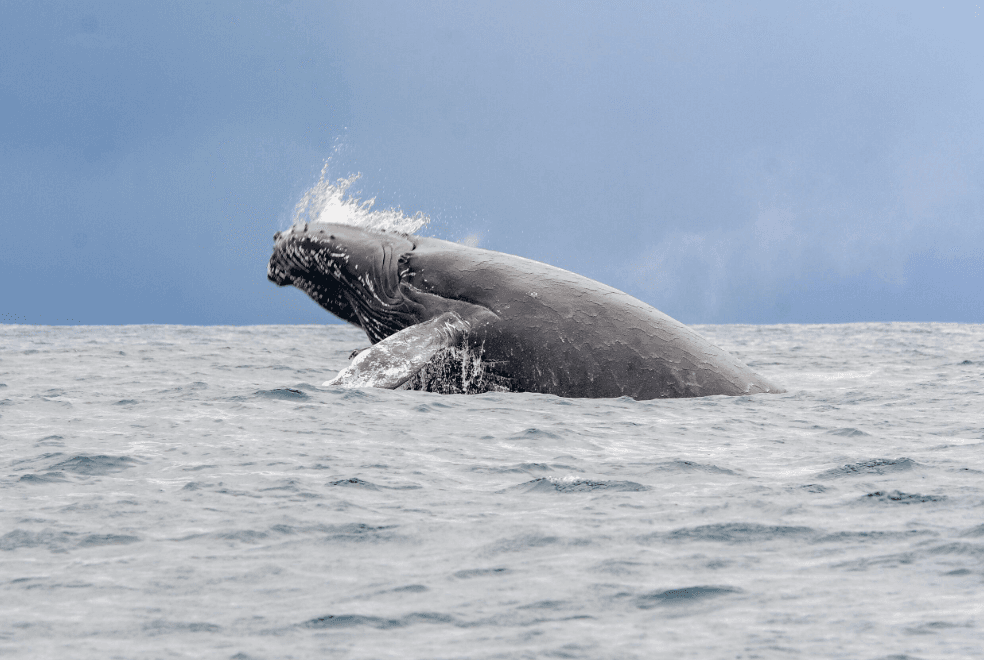
- Breaching: The whale propels much or most of its body out of the water.
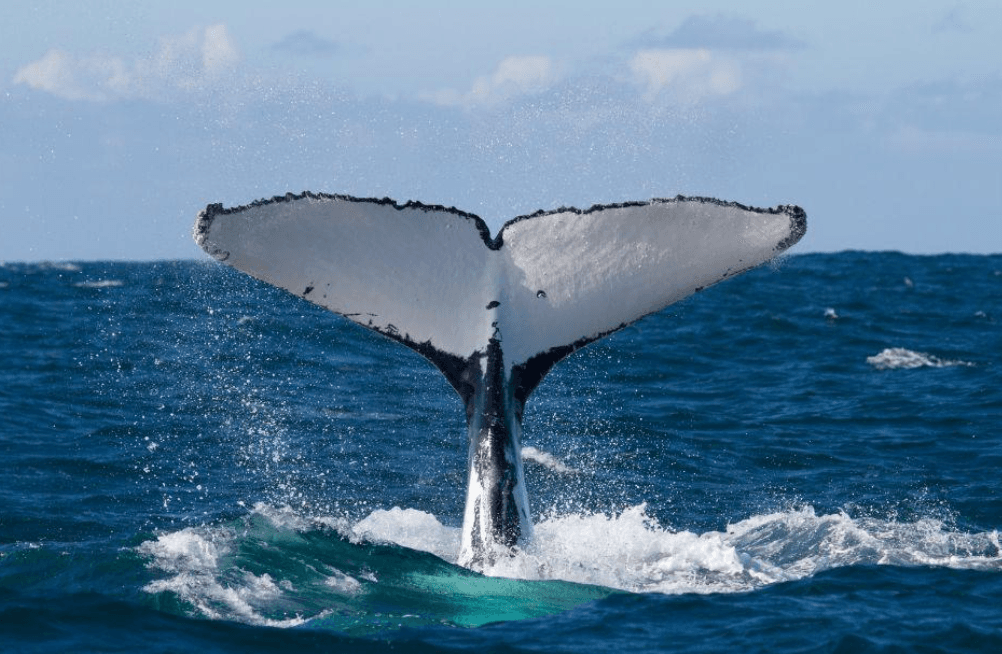
- Tail slapping: The whale strikes the water with its tail flukes.
- Pectoral-fin slapping: The whale strikes the water with one of its long pectoral fins.
These are descriptions of visible actions, not complete explanations of why the animal performs them. Different behaviors may occur during the same encounter, but one should not assume they all have the same purpose.
Why This Behavior Adds Interest to Whale Watching
Whale watching is not only about dramatic surface displays. Observing how a whale moves through its environment can also be fascinating.
A curved path may encourage you to pay closer attention to the animal's direction, its relationship with other whales, and the way its position changes between sightings.
These details can turn a brief encounter into a more thoughtful wildlife observation experience.
Samaná Bay offers visitors a chance to observe humpback whales during an important part of their seasonal life cycle. Every trip is different, and not every whale will display the same movements.
The most rewarding approach is to remain patient, listen to the guide, and appreciate the opportunity to observe a wild animal behaving naturally.
Frequently Asked Questions
Why do humpback whales swim in circles?
A whale may follow a curved route while maneuvering, changing direction, or moving near another whale. A circular-looking path does not have one confirmed explanation in every situation.
Do humpback whales swim in circles when they are mating?
Circular movements may occur during social interactions, but the shape of a whale's path alone does not prove that mating or courtship is taking place.
Can a whale swim in a perfect circle underwater?
Whales can maneuver along curved paths, but observing a few surface appearances does not establish that the underwater route is a perfect circle.
Is circular swimming normal for humpback whales?
Curved movements and changes in direction are part of swimming and maneuvering. However, a particular observed pattern should be interpreted in context rather than automatically classified as normal or abnormal.
Can visitors see circular swimming in Samaná Bay?
Visitors may observe whales changing direction or following curved paths during the seasonal whale-watching period. A complete circular movement is not guaranteed on any particular trip.
Final Thoughts
When a humpback whale appears to swim in circles in Samaná Bay, its movements offer an opportunity to observe how the animal maneuvers through its environment.
The curved path may be related to changing direction, moving near other whales, or adjusting its position within an area. The view from a boat can also make a more complicated route appear circular.
Rather than assuming a particular reason, watch the whale across multiple sightings, consider the surrounding activity, and listen to your guide's explanation.
By focusing on what you can actually observe, you can enjoy a more educational whale-watching experience while respecting the freedom and natural behavior of these remarkable marine mammals.

Local explorer & expert guide in Tours Miches.