Why Do Humpback Whales Sometimes Surface at an Angle in Samaná Bay?
During a whale-watching trip in Samaná Bay, Dominican Republic, you may notice a humpback whale appearing at the surface at an unusual angle. Instead of seeing its back emerge in what looks like a straight line, you might see one side of its body first, followed by the dorsal fin or a section of its back.
This can make the whale seem to be surfacing diagonally, leaning to one side, or approaching the surface from an unexpected direction.
Such an appearance can be fascinating, but it does not always mean the whale is performing a special behavior. Its underwater orientation, movement, and the viewing angle from the boat can all influence what visitors see.
In this guide, we explore why a humpback whale may appear at an angle when surfacing, how to interpret the visible signs, and what to look for during your next whale-watching experience in Samaná Bay.
What Does It Mean When a Humpback Whale Surfaces at an Angle?
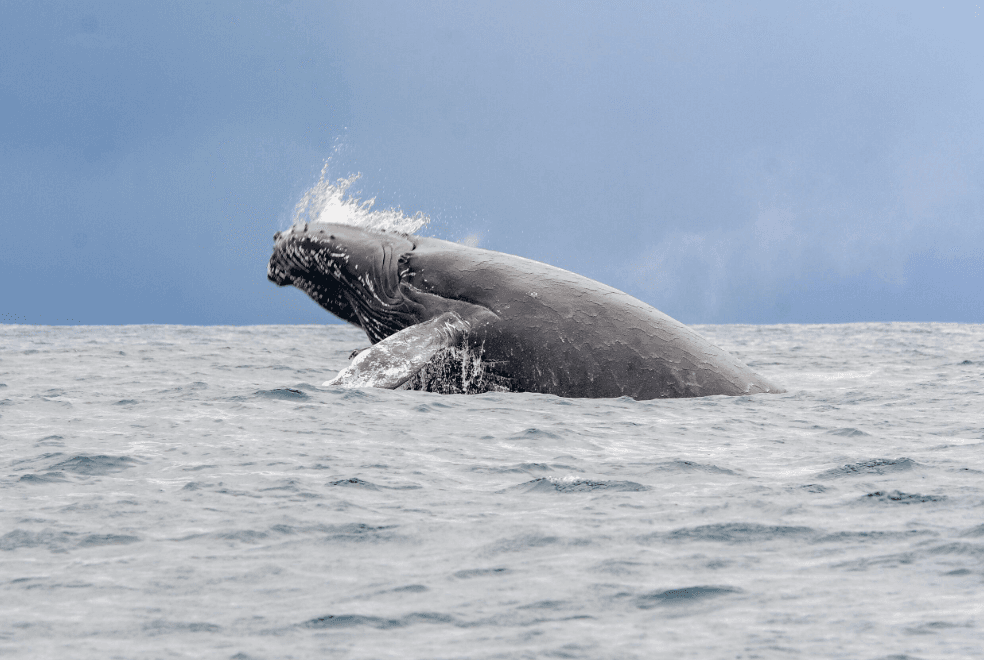
An angled surfacing occurs when a whale's body appears to emerge diagonally or when its back becomes visible at an oblique angle relative to the observer.
The whale may be moving upward toward the surface while its body is not aligned directly toward the boat. Alternatively, it may be traveling across the observer's field of view, making its emergence look diagonal.
It is important to distinguish the whale's actual body position from the perspective created by the viewing angle. From a moving boat, it can be difficult to judge the animal's orientation precisely.
An angled appearance is therefore best treated as a description of what you see, rather than proof that the whale is deliberately performing a particular maneuver.
Why Might a Humpback Whale Surface at an Angle?
There is no single explanation for every angled surfacing. Several factors may contribute to the appearance.
1. The Whale's Underwater Orientation
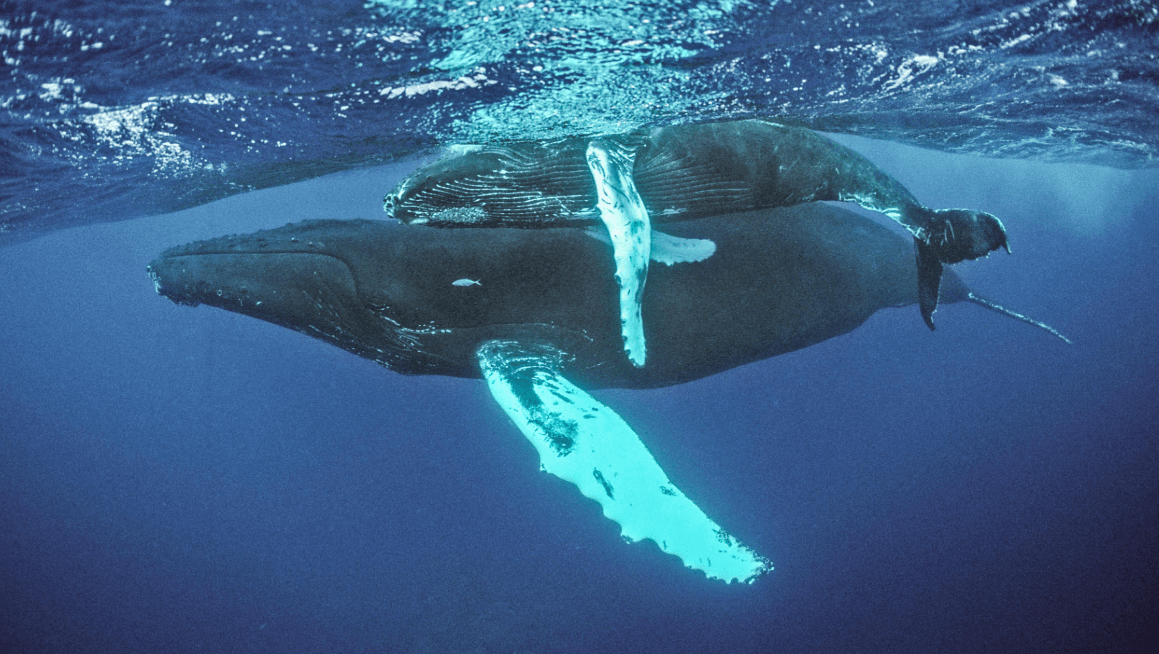
A humpback whale does not have to approach the surface with its body perfectly horizontal or aligned with the boat.
As it swims underwater, its body can be oriented in different directions. When it rises toward the surface, part of its back may become visible before the rest of its body.
From the boat, this can look like the whale is emerging diagonally. However, a brief sighting may not reveal the whale's complete underwater posture.
2. The Direction of Travel
The direction in which a whale moves can affect how its surfacing looks to an observer.
Imagine a whale traveling across the front of a boat rather than directly toward or away from it. As the animal comes into view, its back and dorsal fin may appear at an angle across the water.
The whale may simply be continuing its movement while surfacing. The diagonal appearance does not necessarily indicate an unusual action or a sudden change in behavior.
To interpret the movement more accurately, watch where the whale appears and how its visible body is oriented relative to the boat.
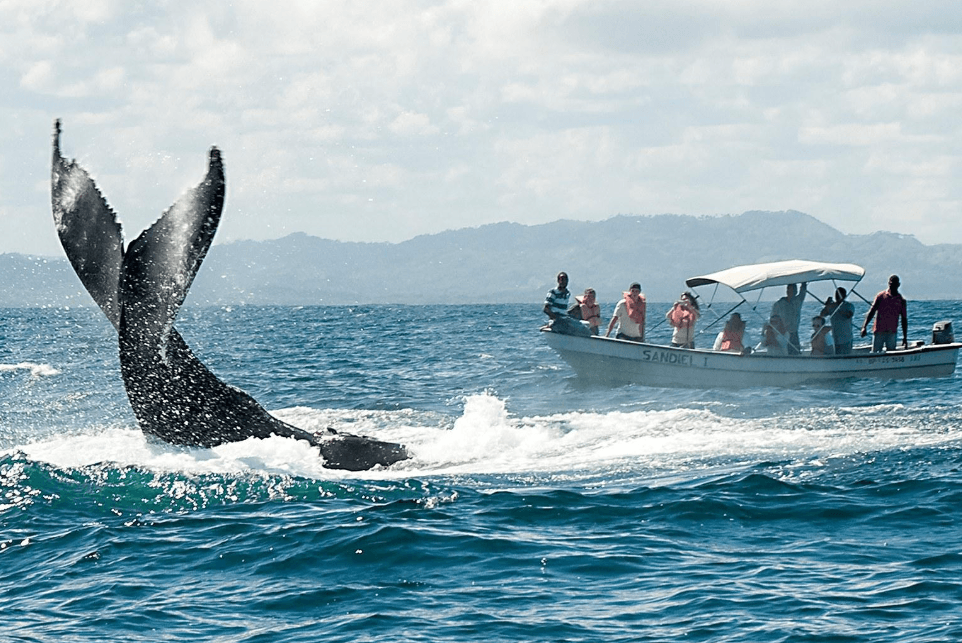
3. The Boat's Viewing Position
The observer's position can make a major difference in how a whale appears.
A whale seen broadside may look quite different from the same animal viewed from the front or rear. Distance, waves, and the height of the observer above the water can also affect the apparent angle.
For example, if the boat is positioned to one side of the whale's path, the animal's back may appear to emerge diagonally even when its underwater movement is relatively straightforward.
This is why it is useful to consider the viewing perspective before drawing conclusions about the whale's movement.
4. The Whale's Body Movement
Humpback whales use their powerful tails and long pectoral fins to propel themselves and maneuver through the water.
As a whale changes its body orientation, the visible part of its back may emerge at a different angle. The movement can be subtle, and visitors may see only the final part of the maneuver.
However, not every angled surfacing can be attributed to a particular fin movement or body action. Without a clear view of the full sequence, the exact mechanics may remain uncertain.
5. Waves and Surface Conditions
The sea surface is rarely perfectly flat. Small waves, swell, reflections, and changing light can influence how much of a whale's body is visible.
A wave may temporarily conceal one section of the animal while leaving another visible. This can make the whale appear to emerge at a sharper angle than it actually does.
Surface conditions can also make it difficult to compare the whale's position across consecutive sightings.
When observing a whale in Samaná Bay, consider both the animal's movement and the conditions on the water.
Does an Angled Surfacing Mean the Whale Is Turning?
Not necessarily. A whale may appear at an angle because of its orientation or the observer's perspective, even if it has not made a major change in direction.
In some situations, the whale may indeed be adjusting its course. In others, it may simply be surfacing while continuing along its existing path.
To distinguish these possibilities, compare the whale's heading across several observations. Look at its position before and after surfacing, and consider whether the boat has changed position too.
A single angled appearance is not enough to establish that the whale has turned.
Is Angled Surfacing the Same as Rolling Sideways?
No. These are different descriptions of visible movement.
When a humpback whale surfaces at an angle, its body may simply appear diagonally oriented as it comes into view. Sideways rolling involves a more noticeable rotation of the body around its lengthwise axis.
The two appearances can be confused when the view is brief or obstructed by waves, but they should not automatically be treated as the same behavior.
If you cannot see the full movement, it is better to describe the whale as surfacing at an angle rather than assigning a more specific label.
Can You Predict Which Part of the Whale Will Appear First?
You may notice patterns during a particular encounter, but it is difficult to predict exactly which part of a whale will become visible first.
A whale's orientation, direction of movement, depth, and position relative to the boat all influence the view. Surface conditions can further complicate the observation.
Sometimes the back may appear first, followed by the dorsal fin. In other cases, the whale may be visible only briefly before submerging or moving beyond view.
Rather than expecting a specific sequence, pay attention to how the whale appears and whether the same pattern occurs again.
How Can You Observe Angled Surfacing During a Whale-Watching Tour?
You do not need special equipment to appreciate this detail. A few simple observation habits can make the encounter more informative.
Watch the whale's outline
Notice which parts of the back, dorsal fin, or body become visible. This can help you describe the whale's position without assuming you know exactly what happened underwater.
Consider your viewing angle
Think about where the boat is positioned relative to the whale. An animal moving across your field of view may appear differently from one moving toward or away from you.
Observe more than one surfacing
If the whale appears again, compare its body orientation and location with the previous sighting. Repeated observations provide more context than a single brief view.
Ask your guide what can be inferred
A guide may help explain the visible movement and point out details that first-time visitors might overlook. However, a responsible interpretation should acknowledge when the evidence is not sufficient to identify a definite cause.
Enjoy the encounter without chasing the animal
If the whale surfaces at a different angle or moves out of view, follow the crew's instructions. Do not encourage the boat operator to pursue the animal for a better viewing position or photograph.
Does Angled Surfacing Mean a Whale Is Uncomfortable?
An angled surfacing by itself is not evidence that a whale is uncomfortable or distressed.
Humpback whales can appear in different orientations during normal movement. The visible angle does not reveal the animal's emotional state, and a brief observation cannot establish why it surfaced that way.
It is better to evaluate the encounter within its broader context and follow responsible wildlife-viewing practices regardless of the whale's apparent posture.
Maintaining an appropriate distance and allowing the whale to move freely are more important than trying to interpret every movement as a response to the boat.
Frequently Asked Questions
Why do humpback whales surface diagonally?
Their underwater orientation, direction of travel, and position relative to the observer can all influence the appearance. Waves and viewing angles may also make a surfacing look more diagonal.
Does an angled surfacing mean a humpback whale is turning?
Not necessarily. It may be surfacing at an angle without making a major change in direction. Multiple observations are needed to assess its apparent course.
Is an angled surfacing a special whale behavior?
The phrase describes the appearance of the surfacing rather than a single, clearly defined behavior. More information about the whale's full movement would be needed to classify it more specifically.
Can sea conditions change how a whale's surfacing looks?
Yes. Waves, reflections, glare, and viewing distance can influence how much of the whale is visible and how its body angle appears.
Is angled surfacing the same as spyhopping?
No. Spyhopping generally involves a whale rising into a relatively upright position with its head above the water. An angled surfacing may simply show the whale's body emerging diagonally.
What should I do if a whale surfaces at an unusual angle?
Observe its body position, consider your viewing perspective, and listen to your guide. Avoid assuming that the movement indicates distress or a particular intention.
Final Thoughts
An angled surfacing is a small but interesting detail to watch for during a humpback whale encounter in Samaná Bay. It can reveal how a whale's orientation and movement influence what visitors see from a boat.
However, the appearance alone does not tell the whole story. Underwater positioning, direction of travel, surface conditions, and the observer's perspective can all contribute to the effect.
During your next whale-watching trip, pay attention to the whale's outline, compare consecutive sightings, and enjoy the opportunity to observe a wild animal in its natural environment. The more carefully you observe, the more you can appreciate without needing to guess at every movement's purpose.

Local explorer & expert guide in Tours Miches.