What Is a Humpback Whale’s Blow How Whales Breathe in Samaná Bay
During whale-watching season in Samaná Bay, one of the most exciting sights is a sudden plume of mist rising above the ocean. Before a humpback whale’s back or tail becomes visible, its blow may reveal where the animal has surfaced.
But what exactly is a whale’s blow Do whales spray seawater into the air, and how often do they need to breathe?
Understanding humpback whale breathing makes a whale-watching trip in the Dominican Republic even more fascinating. It also helps visitors recognize natural behaviors without assuming that every surface appearance means the same thing.
What Is a Humpback Whale’s Blow?
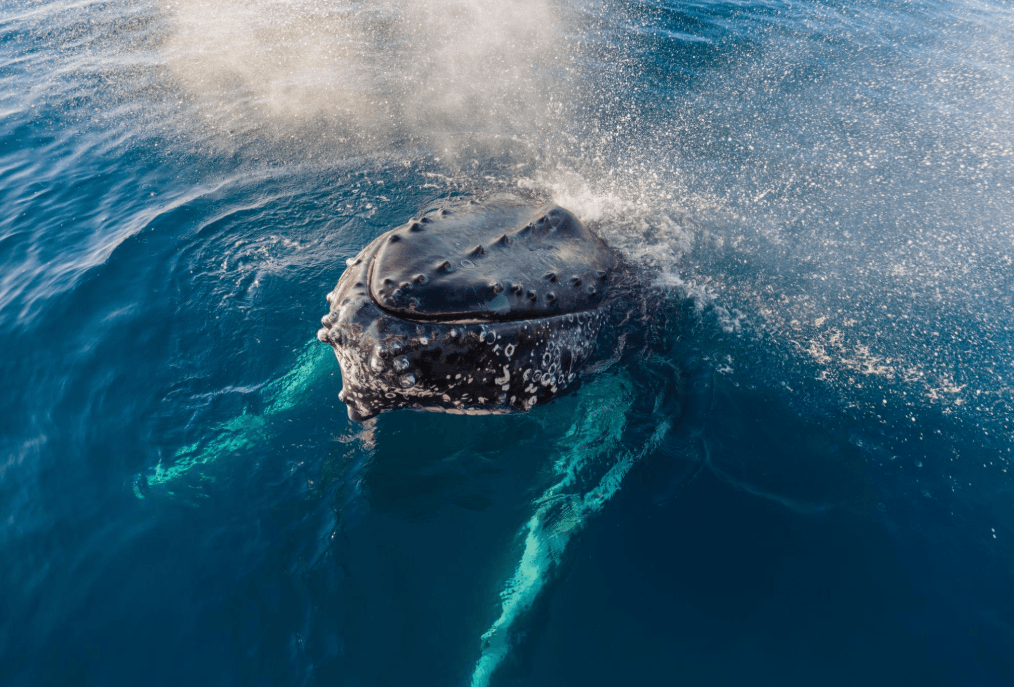
A humpback whale’s blow is the visible cloud produced when the whale exhales at the surface. It can look like a fountain of mist rising above the water.
Whales are mammals, not fish, so they breathe air using lungs. When a humpback comes to the surface, it releases air through its blowholes. The warm, moist exhaled air meets the surrounding atmosphere, and droplets of moisture can become visible as a misty plume.
The blow may appear white or pale against the blue sea, making it easier to spot from a whale-watching boat.
Its appearance can change with lighting, wind, humidity, viewing distance, and the whale’s movement. A visible blow is a useful clue, but it is not a precise measurement of the animal’s size, age, or health.
Do Humpback Whales Spray Seawater?
A common misconception is that whales shoot seawater out of their heads when they breathe.
The visible plume is primarily associated with exhaled air and moisture, rather than a deliberate spray of seawater. Water around the blowholes may also be thrown into the air as the whale surfaces, which can contribute to the appearance.
The distinction matters because a whale’s blow is part of its breathing process. It is not a water fountain like those found in parks or aquariums.
Where Are a Humpback Whale’s Blowholes?
Humpback whales have two blowholes on the top of their heads. This placement allows them to breathe when most of their bodies remain underwater.
When the whale reaches the surface, it can exhale and then inhale quickly before diving again. The blowholes close underwater, helping prevent water from entering the respiratory system.
Unlike humans, who breathe through their noses and mouths, humpback whales use their blowholes for breathing. Their respiratory system is adapted to life in the ocean, where they must manage their time underwater and return to the surface for air.
How Often Do Humpback Whales Come Up for Air?
Humpback whales do not breathe at a fixed interval. Their surfacing patterns depend on what they are doing, how active they are, and their individual behavior.
A whale moving calmly near the surface may appear several times in a relatively short period. Another may take a longer dive before resurfacing.
During a whale-watching excursion in Samaná Bay, you might see a sequence of blows followed by the whale’s back, dorsal fin, or tail. However, the timing and sequence can vary considerably.
There is no guaranteed schedule for when a whale will surface. Responsible tour operators allow the animals to behave naturally instead of promising visitors a particular display.
Why Do Humpback Whales Blow Before Diving?
A surface visit gives a humpback whale an opportunity to exchange air before returning underwater. The whale exhales, inhales, and may repeat the process before beginning another dive.
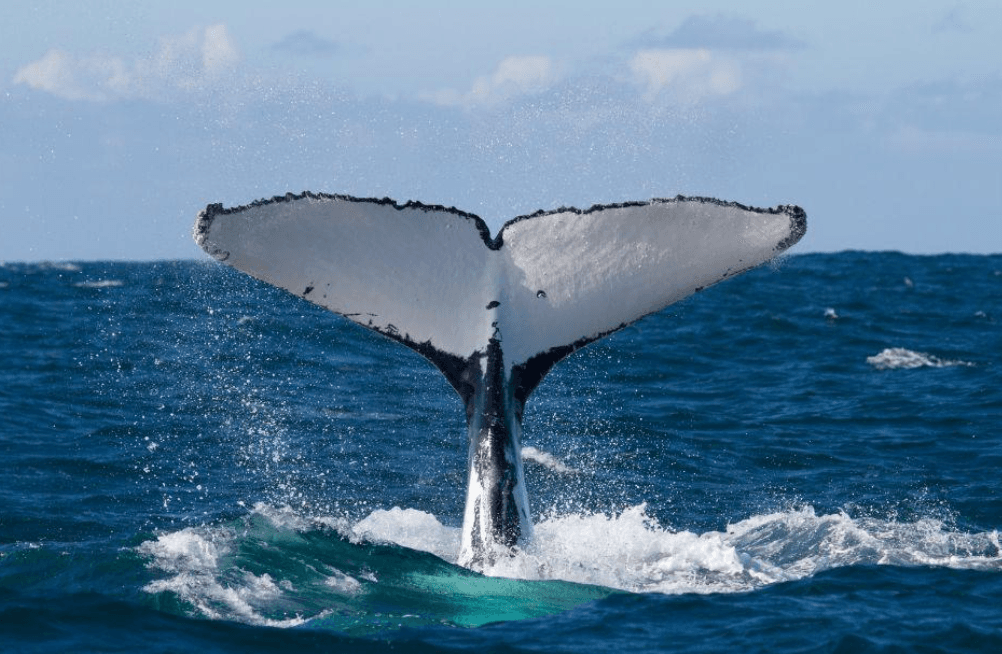
Observers sometimes see several blows in succession. The whale may then arch its back and descend, although not every dive ends with a visible tail fluke.
The shape of the back, the position of the dorsal fin, and the movement of the tail can help observers understand what they are seeing. Still, surface behavior varies, and one observation does not always reveal exactly what the whale will do next.
Can You See a Whale’s Blow From a Boat in Samaná?
Yes. A whale’s blow can be one of the first signs that a humpback is nearby during the seasonal whale-watching period in Samaná Bay.
The mist may be visible before the rest of the animal appears. On a calm day, the plume can stand out against the horizon; in windy or choppy conditions, it may be harder to notice.
Visibility depends on several factors:
- Distance: A distant blow may look like a tiny white mark.
- Wind: Breezes can quickly disperse the plume.
- Sea conditions: Waves and spray can make observations more difficult.
- Lighting: Sunlight and the background can affect contrast.
- Whale behavior: Some surfacing events are brief, while others provide a longer view.
For the best experience, listen to your guide, scan the water patiently, and avoid expecting every sighting to produce a dramatic plume.
What Should You Look for After a Whale Blows?
Once you spot a blow, watch the surrounding water carefully. The whale may surface again nearby, offering a view of different parts of its body.
You may notice:
- The back: A curved section of the whale appearing above the water.
- The dorsal fin: A small fin along the whale’s back.
- The tail flukes: The broad tail may rise before a deeper dive, but this does not happen on every dive.
- Repeated surfacing: The whale may come up several times to breathe before changing its direction or diving.
Keep watching the water rather than focusing exclusively on your camera. Some of the most memorable moments happen quickly, and observing the animal directly can be more rewarding than trying to capture every movement.
Is a Large Blow a Sign of a Healthy Whale?
Not by itself. A whale’s blow can vary in appearance for many reasons, including viewing conditions and the animal’s breathing behavior.
The size or shape of a visible plume is not a reliable standalone health assessment. Wildlife researchers consider broader evidence and appropriate observation methods when studying whale condition.
Visitors should therefore avoid drawing medical conclusions from a single sighting. If a whale looks different from another whale, it does not automatically mean something is wrong.
How to Observe Whale Breathing Responsibly
Whale watching is most rewarding when visitors can observe animals without causing unnecessary disturbance.
During your trip in Samaná Bay:
- Follow your captain and guide’s instructions.
- Keep a respectful distance from the whales, according to applicable rules.
- Avoid shouting or making sudden movements in an attempt to attract their attention.
- Do not try to approach a whale independently or encourage a boat to chase it.
- Be patient when a whale disappears underwater; it may simply be continuing its natural dive.
A responsible excursion puts wildlife welfare first and recognizes that whales decide when and where they surface.
Frequently Asked Questions
What is the mist that comes out of a humpback whale’s head?
It is the visible result of the whale exhaling warm, moist air through its blowholes. Droplets of moisture make the breath appear as a plume above the surface.
Do humpback whales breathe underwater?
No. Humpback whales breathe air at the surface using lungs. They can stay underwater for extended periods, but they must return to the surface to breathe.
Why do whales have blowholes on top of their heads?
The position allows whales to breathe while keeping most of their bodies underwater. Their blowholes close when submerged.
Can I spot whales by looking for their blows?
Yes. A blow can be an early clue that a whale has surfaced nearby. However, wind, waves, distance, and lighting can make it difficult to see.
Will every whale-watching tour in Samaná include a close view of a whale’s blow?
No sighting or viewing distance can be guaranteed. Whale activity and sea conditions vary, and responsible operators prioritize the animals’ welfare.
Discover More About Samaná Whale Watching
Seeing a humpback whale’s blow is a small but fascinating glimpse into how these marine mammals live. It is part of the breathing process that allows them to alternate between underwater activity and life at the surface.
During whale-watching season in Samaná Bay, watching for a plume of mist can help you notice a whale before its body appears. Bring patience, listen to your guide, and appreciate each sighting on its own terms.
The next time you see a whale surface, you will know that the mist above its head is more than a dramatic ocean spectacle: it is a visible part of the whale’s remarkable way of breathing.

Local explorer & expert guide in Tours Miches.