How Do Humpback Whales Find Their Way Back to the Caribbean Each Year?
Every year, humpback whales undertake remarkable migrations between colder feeding waters and warmer tropical breeding grounds. In the North Atlantic, many of these whales travel toward the Caribbean during winter, with Samaná Bay in the Dominican Republic serving as an important area for observing them.
But how do these enormous marine mammals find their way across such vast stretches of ocean They cannot follow road signs, and the open sea often looks remarkably similar in every direction.
Scientists are still investigating the exact mechanisms humpback whales use to navigate. Research suggests that navigation may involve several environmental cues, memory, and potentially other biological abilities. Understanding these possibilities helps explain the complexity of whale migration and why the waters around Samaná are such a fascinating place to observe these animals.
Why Do Humpback Whales Return to the Caribbean?
Humpback whales migrate because different ocean regions provide different benefits throughout the year.
During warmer months, many North Atlantic humpbacks feed in productive northern waters, where seasonal conditions support abundant prey. During winter, numerous whales travel south to tropical and subtropical breeding areas.
Caribbean waters provide important habitat for courtship, mating, and the birth and early development of calves. Samaná Bay is one of the well-known places where visitors can observe North Atlantic humpbacks during the breeding season.
The journey is not simply a search for warmer water. It is part of a seasonal life cycle shaped by feeding opportunities, reproduction, and the conditions whales encounter in different parts of the ocean.
1. Ocean Conditions May Provide Navigation Clues
The ocean is not a uniform environment. Water temperature, salinity, currents, and other physical properties vary across different regions.
These environmental differences may help whales understand their surroundings as they travel. Ocean currents can influence the direction and effort required to move through the water, while changes in water conditions may provide useful contextual information.
However, scientists have not established that humpback whales follow a specific temperature or salinity pattern as a complete navigation system. Such environmental features are better understood as possible sources of information rather than proven underwater road signs.
Whales also need to adjust their movements to changing conditions. Their routes may vary depending on oceanography, individual circumstances, and other environmental factors.
2. Memory May Help Whales Recognize Familiar Destinations
Migration often involves returning to the same general regions in different years. This raises an important question: can whales remember places they have visited previously?
Long-lived animals can benefit from retaining information about their environments. For humpback whales, familiarity with seasonal feeding and breeding areas may help support repeated migrations.
A whale that has traveled between northern feeding grounds and Caribbean breeding waters in previous years may have experience that helps guide later journeys. Researchers can investigate these patterns by identifying individual whales through photographs and comparing their sightings across seasons.
Nevertheless, repeated appearances in the same region do not reveal exactly how a whale remembers a destination. Scientists continue to investigate the roles of individual experience, learned behavior, and inherited migratory tendencies.
3. Could Humpback Whales Sense Earth's Magnetic Field?
One intriguing possibility is that whales use information from Earth's magnetic field.
Earth has a magnetic field that varies geographically. Some animals can detect magnetic information, and researchers have investigated whether similar abilities might contribute to navigation in marine mammals.
For humpback whales, however, the precise role of magnetic sensing in migration remains uncertain. It is a plausible research question, not a confirmed explanation for how they find Samaná Bay.
Scientists would need stronger evidence to establish whether humpbacks can sense magnetic cues, how they might use them, and how important those cues are compared with other sources of information.
The possibility is fascinating because magnetic information could potentially help a migrating animal maintain orientation across a vast ocean where obvious visual landmarks are limited.
4. The Sun and Stars May Offer Orientation Information
On land, many animals use visual features to orient themselves. At sea, the situation is more challenging because the horizon and surrounding water can appear similar over long distances.
The position of the Sun, the pattern of daylight, and potentially celestial information could contribute to orientation in some circumstances. But the extent to which humpback whales use these cues during long-distance migration is not firmly established.
Cloud cover, darkness, underwater travel, and changing weather also affect the information available to a whale.
It is therefore more accurate to consider celestial orientation as a possible area of investigation than to claim that humpback whales navigate directly by following the Sun or stars.
5. Inherited Behavior May Influence Migration
Not every whale needs to discover a migration route entirely on its own.
Many migratory animals show seasonal movements that are influenced by inherited biological tendencies as well as individual experience. Humpback whales may similarly benefit from a combination of instinctive behavior and learning.
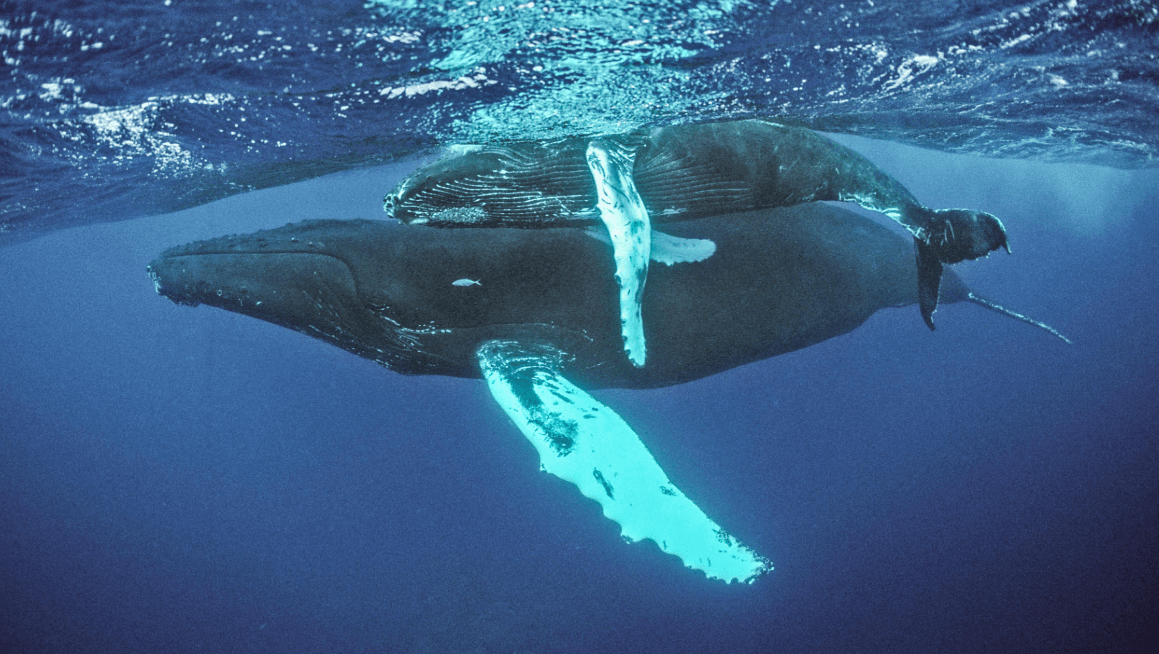
Young whales travel with their mothers during early life, giving them opportunities to experience migration and become familiar with important habitats. Whether and how specific route information is learned during these journeys remains an area of scientific interest.
Over time, the interaction between inherited behavior and experience may help explain why many whales return to familiar seasonal regions.
It is important to distinguish this general explanation from the idea that every whale follows an identical route. Individual movements can differ, and migration behavior is not necessarily the same across all populations.
6. How Do Scientists Study Whale Navigation?
Researchers cannot simply ask a whale which direction it intends to travel. Instead, they combine several kinds of evidence to understand migration.
Photo identification
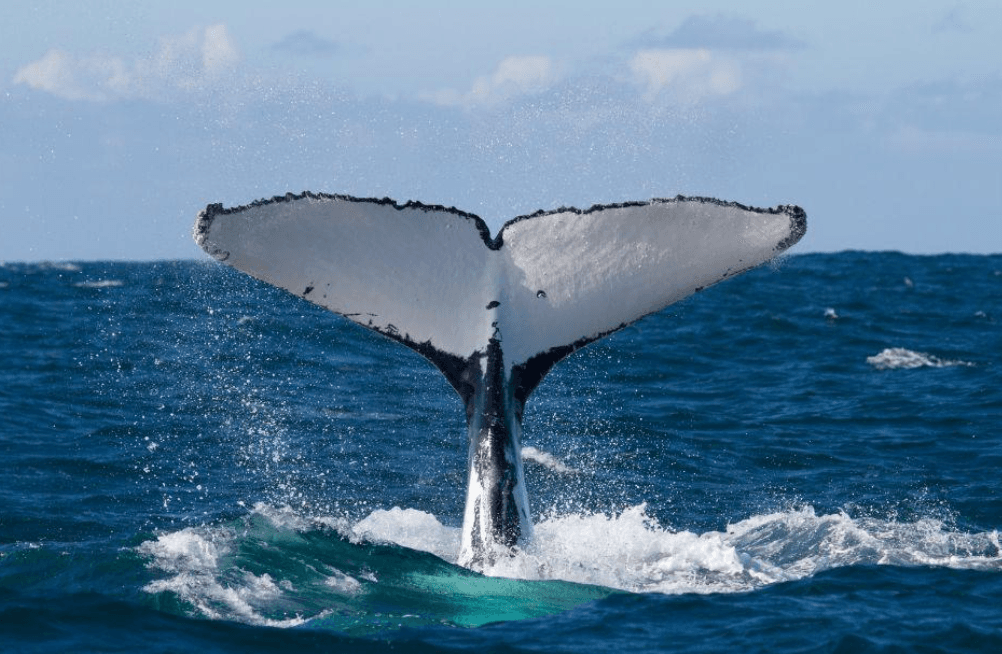
The unique patterns and markings on a humpback whale's tail flukes can help researchers recognize individuals. Comparing photographs collected in different places and years reveals where identified whales have been observed.
Satellite tracking
When suitable tags are used in research, satellite-linked tracking can provide information about an individual whale's movements. These data help researchers examine routes, travel timing, and how movements relate to environmental conditions.
Long-term sighting records
Photographs, observations, and research databases can reveal recurring seasonal patterns. Records from different locations may help scientists understand how whale populations use the Atlantic and Caribbean.
Oceanographic research
Scientists can compare whale movements with information about currents, water conditions, and other environmental features. These comparisons can test possible explanations for the routes whales take.
Together, these methods provide a stronger understanding of migration than any single observation could provide.
7. What Does Whale Navigation Mean for Samaná Bay?
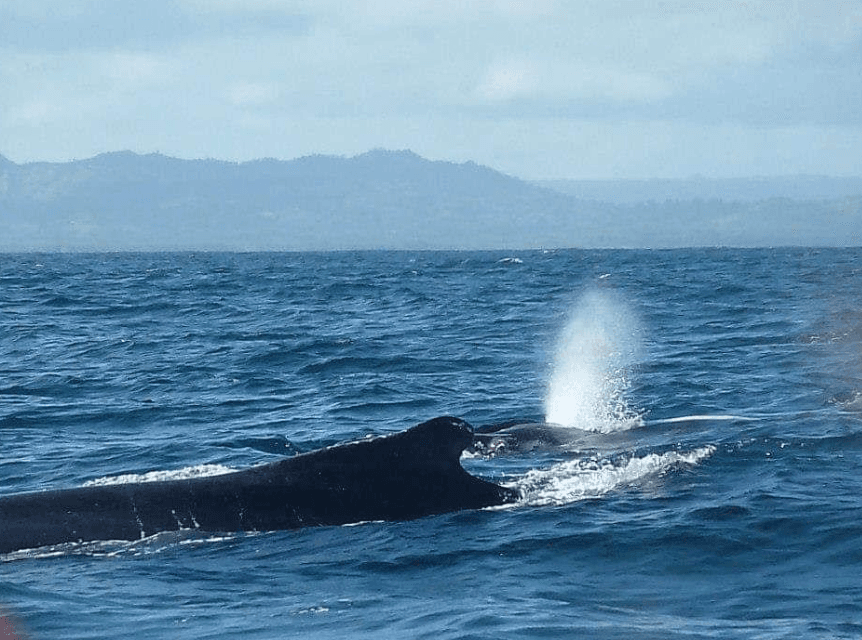
Samaná Bay is an important seasonal destination for whale watchers because North Atlantic humpbacks visit the region during the breeding season.
Their presence connects the Dominican Republic with distant marine habitats in the North Atlantic. A whale observed near Samaná may have traveled a considerable distance from northern waters, although its exact journey cannot be determined from a sighting alone.
This connection also highlights the importance of protecting more than one location. Conditions in feeding areas, migration corridors, and breeding grounds can all matter to the broader life cycle of a migratory whale.
Responsible whale watching can help visitors appreciate this connection while minimizing disturbance. Following the captain's instructions, keeping appropriate distances, and choosing responsible operators are practical ways to support safer encounters.
8. Do All Humpback Whales Follow the Same Route?
No. Migration patterns vary between populations, and individuals may also differ in their movements.
North Atlantic humpbacks are associated with several northern feeding areas and breeding regions in the western North Atlantic and Caribbean. Their movements should not be treated as one identical route followed by every whale.
Even when two whales are observed in the same breeding area, they may have come from different feeding locations. A photograph or sighting alone cannot establish their full travel history.
Researchers use long-term identification and tracking data to investigate these differences and better understand how whale populations connect distant habitats.
Frequently Asked Questions
How do humpback whales find the Caribbean?
The exact navigation process is not fully understood. Memory, environmental information, learned behavior, and possible magnetic sensing are among the mechanisms researchers investigate.
Do humpback whales return to the same breeding grounds every year?
Many humpbacks show recurring seasonal associations with particular breeding regions, but individual movements can vary. Returning to a familiar area does not mean every whale visits the exact same location every year.
Can scientists track a whale's entire migration?
Sometimes researchers can track an individual over substantial portions of its journey using suitable satellite tags. Photo identification and sighting records also reveal movements, but these methods do not necessarily provide a continuous record of every journey.
Why do humpback whales migrate to Samaná Bay?
Samaná Bay provides seasonal breeding habitat for North Atlantic humpbacks. The wider Caribbean is important for reproductive activities and early calf development.
Do humpback whales use Earth's magnetic field?
Magnetic sensing is a possible navigation mechanism under investigation, but its specific role in humpback whale migration has not been conclusively established.
When can visitors see migrating humpback whales in Samaná?
Whales are commonly observed in the region during the winter breeding season, generally from January through March, within a broader seasonal period that can extend from January into April. Sightings are never guaranteed, and the timing of individual animals can vary.
Conclusion
Humpback whale migration is a remarkable example of how marine animals move between distant habitats as part of their annual life cycle. Their recurring presence in Caribbean waters, including Samaná Bay, raises fascinating questions about memory, orientation, environmental cues, and the influence of experience.
Scientists are using photo identification, satellite tracking, long-term observations, and oceanographic data to investigate how these whales navigate. Although several mechanisms are plausible, no single explanation has yet accounted for every aspect of their journeys.
For visitors watching humpbacks in Samaná, the experience offers more than a chance to see a whale surface. It provides a glimpse into a much larger journey connecting tropical breeding grounds with distant feeding areas across the North Atlantic.

Local explorer & expert guide in Tours Miches.